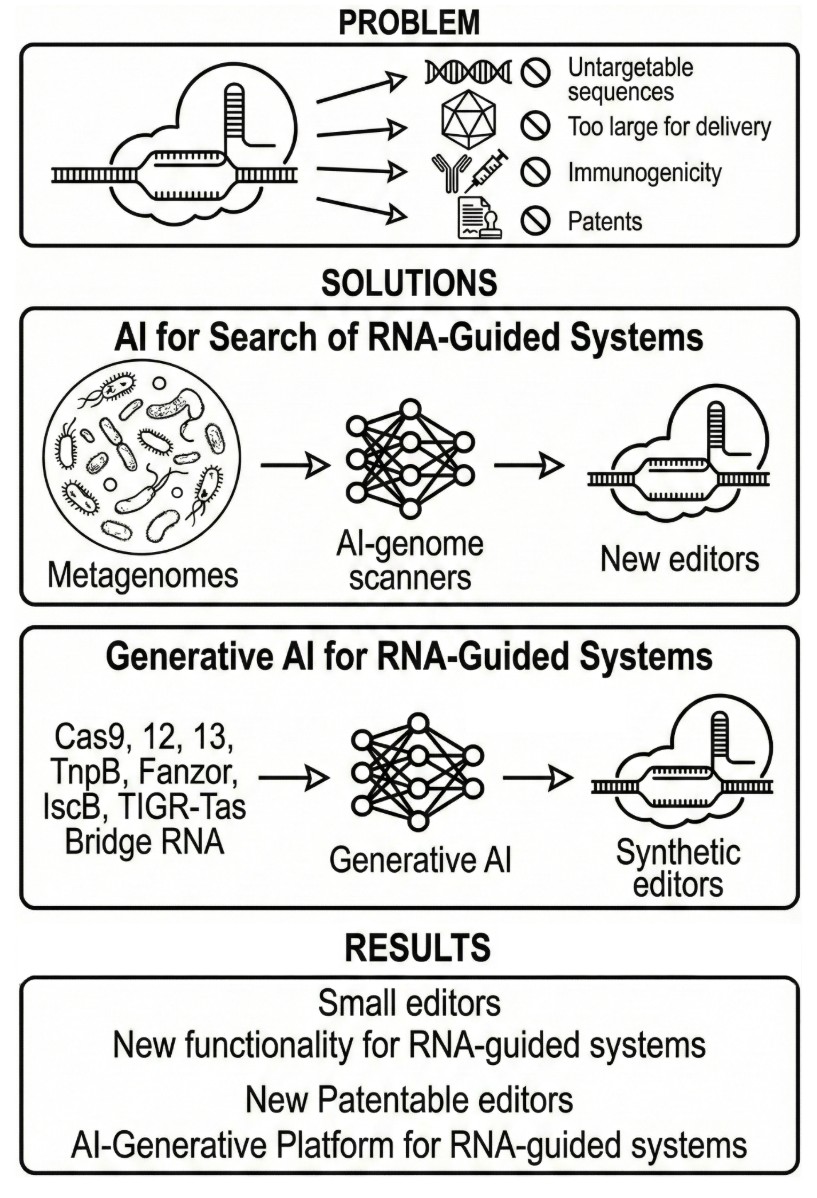
1. AI-Driven Discovery of Novel Molecular Systems
Our laboratory utilizes advanced computational biology to conduct bioinformatic searches and analyses of new molecular systems across vast genomes and metagenomes. By integrating artificial intelligence into our pipelines, we deploy specialized AI-search algorithms specifically designed to identify novel RNA-guided systems. This approach leverages cutting-edge neural architectures—including Large Language Models (LLMs), Graph Neural Networks, and Kolmogorov-Arnold Networks—to process complex biological data. Together, these tools allow us to precisely predict RNA binding and model full protein-RNA complexes. This computational foundation enables the rapid discovery of novel enzymes, including unique CRISPR-Cas variants and prokaryotic defense mechanisms.
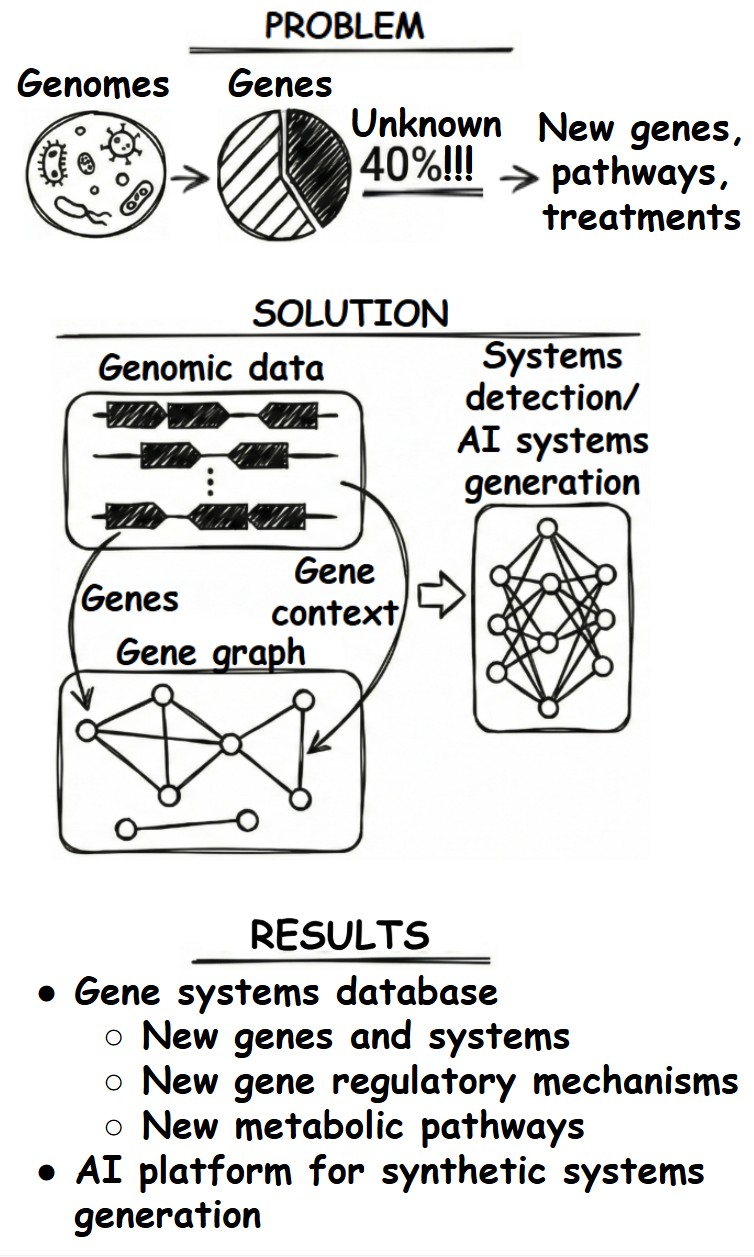
2. Generative AI for Novel Genome and Epigenome Editors
Building upon our bioinformatic discoveries, a major focus of our research is the creation of new molecular tools for the targeted recognition and modification of genomes and epigenomes. This track represents a deep integration of comparative genomics, artificial intelligence, and synthetic biology. We utilize generative AI and deep learning to move beyond natural discovery, engineering our findings into functional, high-tech products and novel technologies that currently have no existing analogs in the world. By leveraging predictive modeling to optimize sequence-specific molecular tools, we aim to design and validate programmable editing tools that will serve as unprecedented prototypes for both genomic and epigenomic manipulation.